The Best Robot Lawn Mowers of 2026, Compared Without the Hype
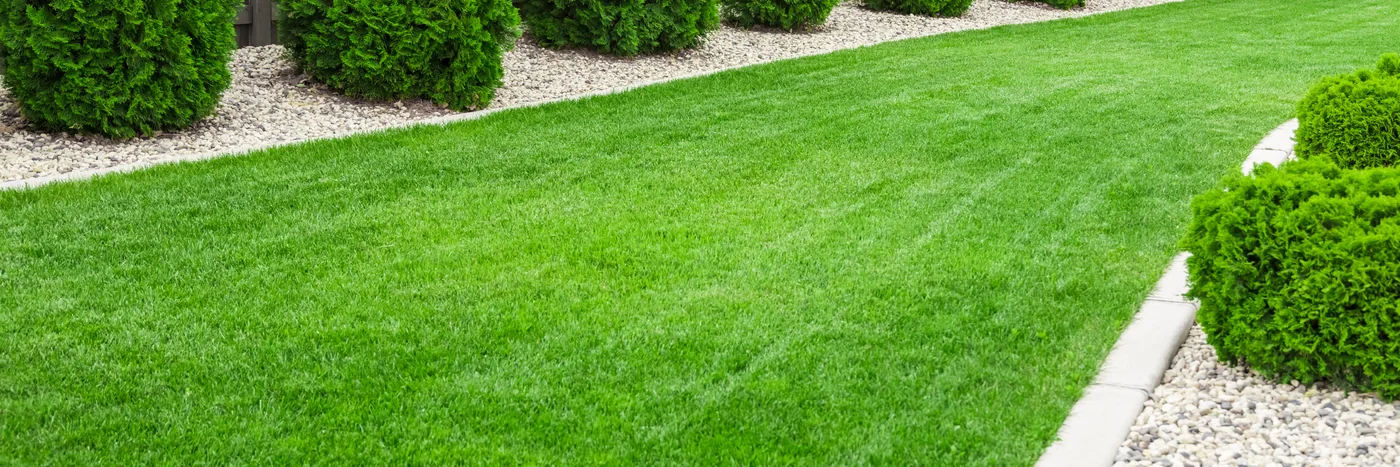
Robot mowers finally got good. For years the category meant burying a boundary wire around your yard, praying it never got cut, and watching a slow puck bounce around in random patterns. The 2026 generation navigates by satellite, LiDAR, or camera, mows in clean stripes, and sets up in an afternoon.
The catch: prices run from $799 to over $4,000, and the spec sheets are written to confuse you. Acre ratings assume the mower runs almost daily, not once a week. Slope percentages get quoted for terrain most suburban lawns will never see. And three different navigation systems get lumped together under "wire-free" when they behave very differently under trees.
We dug through published specs, warranty terms, and independent testing on the machines that matter this year. Here is where each one lands.
The Short Version
| Price* | Coverage | Navigation | Max slope | Best for | |
|---|---|---|---|---|---|
| Segway Navimow i110N | $1,099-1,299 | 1/4 acre | RTK + camera | ~30% | Best value overall |
| Mammotion LUBA 3 AWD | $2,099-2,499+ | 0.37-2.5 acres by model | LiDAR + RTK + camera | 80% | Big or steep yards |
| Husqvarna Automower 410iQ | $2,999 | 1/2 acre | EPOS satellite | 45% | Warranty and dealer support |
| ECOVACS Goat A3000 LiDAR Pro | $2,500-3,000 | 3/4 acre | Dual LiDAR + vision | ~45% | Clean edges, complex layouts |
| Worx Landroid Vision | $1,199.99-2,999.99 | 1/4 to 1 acre by model | RTK Cloud + camera | 30% (4WD: 84%) | Budget wire-free |
1. Segway Navimow i110N: Best Value Overall
Segway Navimow i110N, $1,099-1,299
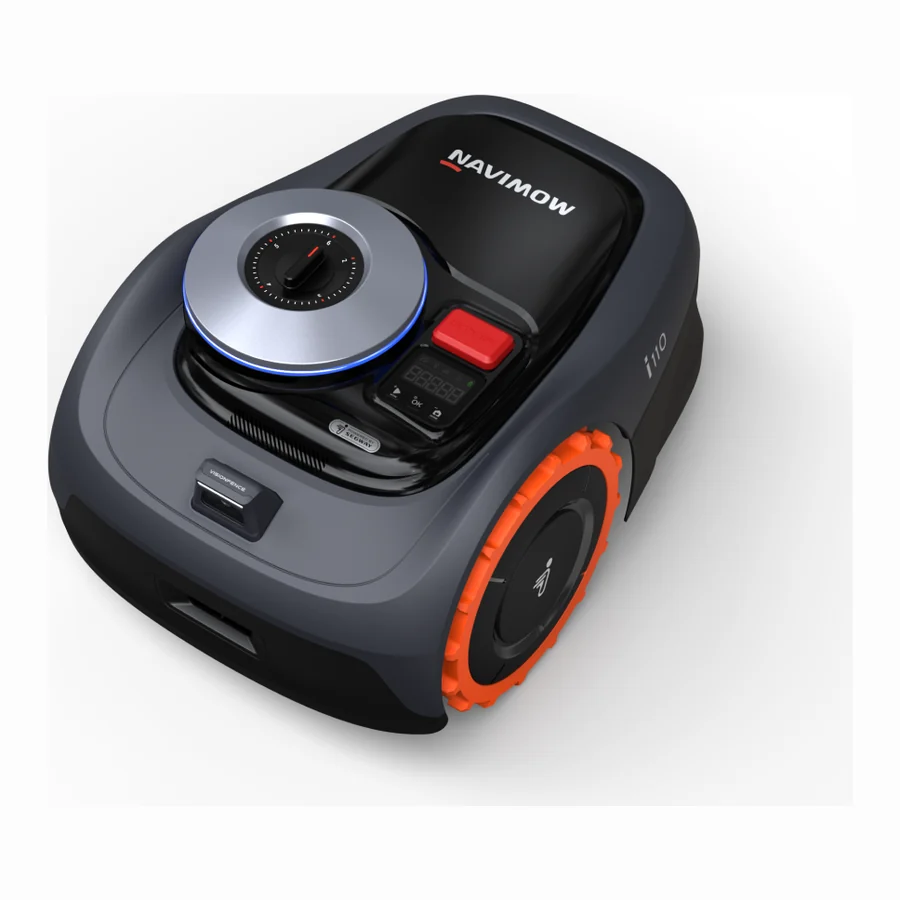
This is the mower we'd point most first-time buyers toward. It covers up to 1/4 acre with no boundary wire, using RTK satellite positioning backed by a 140-degree camera Segway calls VisionFence. You draw your lawn's boundary in the app, and the mower holds that line to within a few centimeters. Setup takes an afternoon, not a weekend.
At 58 decibels it's quiet enough to run at night without the neighbors knowing you own it. It manages up to 12 separate zones, which handles most front-plus-back suburban layouts. The smaller i105N does the same job for 1/8 acre at $799-999 if your lawn is genuinely small.
The honest knock: RTK needs a decent view of the sky. If your yard sits under heavy tree canopy, the camera assist helps but positioning can degrade. That's when you look at LiDAR machines like the LUBA 3 or the Goat, and pay for the privilege.
Pros
- Best price-to-capability ratio in the category
- Genuinely simple app-based setup, no wire
- Very quiet at 58 dB
- 12-zone management covers most real yards
Cons
- RTK struggles under dense tree cover
- ~30% slope limit rules out steep lots
- 1/4 acre rating assumes near-daily mowing
2. Mammotion LUBA 3 AWD: Best for Big or Steep Yards
Mammotion LUBA 3 AWD, from $2,099
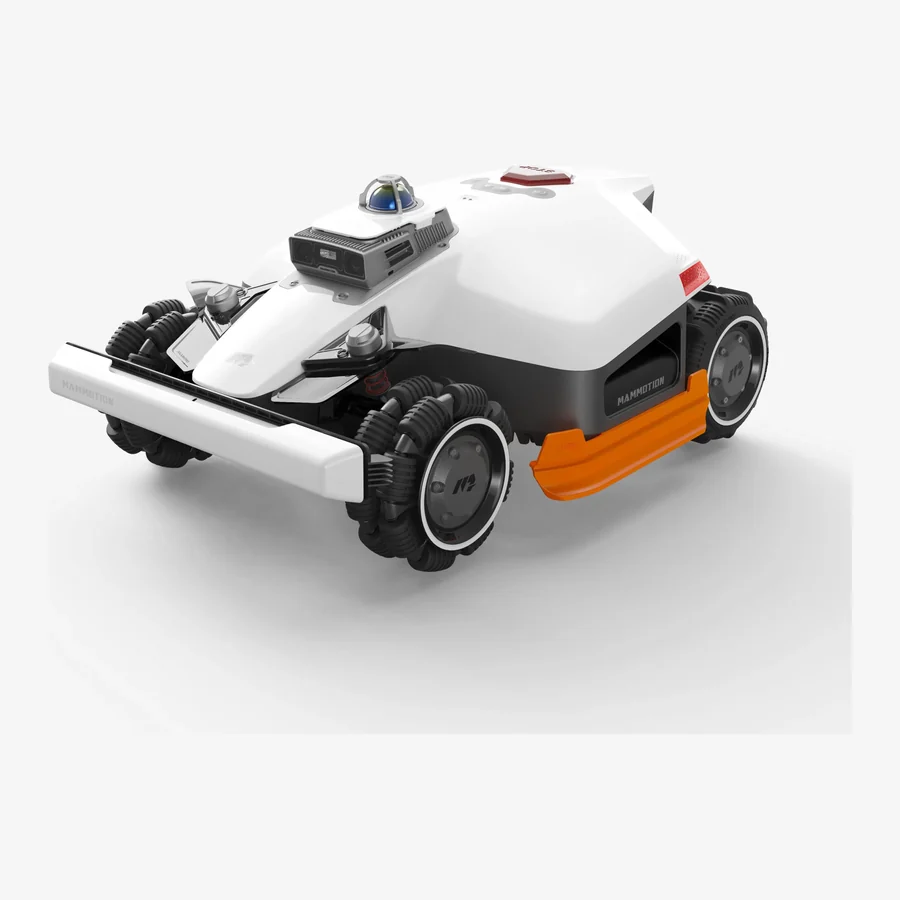
The LUBA 3 is the machine you buy when your yard fights back. All-wheel drive climbs 80% grades, which is roughly a 39-degree hillside, and the top models cover up to 2.5 acres. Its navigation fuses three systems: 360-degree LiDAR, network RTK, and dual-camera AI vision. When satellites drop out under trees, LiDAR keeps it on course. That redundancy is the real reason to pay Mammotion money.
A word on that 80% slope figure: it's real, and it's also marketing. Almost no residential lawn approaches it. What the AWD actually buys most owners is confident traction on wet grass and 20 to 30 percent grades where cheaper rear-drive mowers slip and scar the turf.
Buy the capacity that matches your lawn. The 1500H at $2,099 handles yards well under an acre; you only need the bigger battery models if you're genuinely over an acre.
Pros
- LiDAR plus RTK plus vision handles tree cover
- 80% slope rating, best-in-class traction
- Models scale from 0.37 to 2.5 acres
- Up to 215 minutes runtime per charge
Cons
- Overkill for a flat 1/4 acre lot
- Heavy machine, leaves marks on soft ground
- Mammotion's app has more depth than polish
3. Husqvarna Automower 410iQ: The Support-and-Warranty Play
Husqvarna Automower 410iQ, $2,999
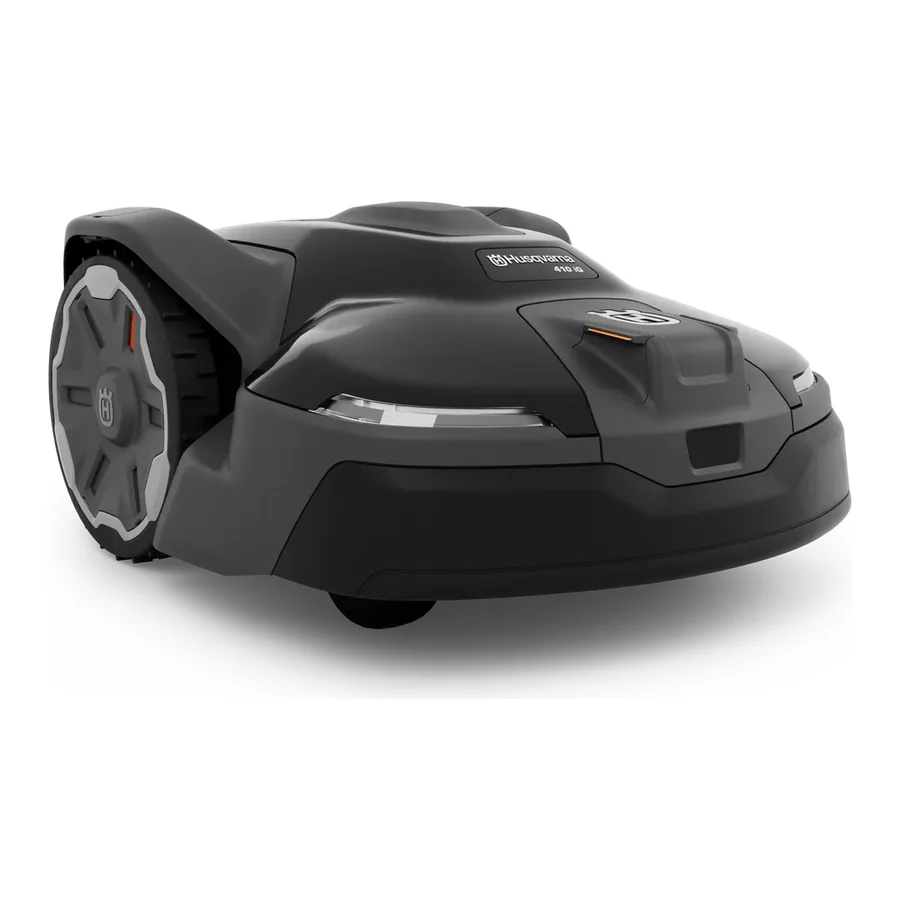
Husqvarna has built robot mowers since 1995, and the iQ series is its wire-free answer: EPOS satellite positioning with centimeter accuracy, 45% slope capability, and cutting height from 1 to 4 inches. Rated for half an acre.
Here's the honest math: on raw specs, the 410iQ loses to machines costing $1,000 less. What you're paying for is the 4-year warranty (batteries 3 years), a national dealer network that will actually service the thing, and three decades of institutional knowledge about what breaks. For some buyers that's worth every dollar. If you're comfortable troubleshooting via app support tickets instead, the value picks above will sting less.
Pros
- 4-year warranty, longest in the category
- Dealer network for service, not just email support
- Proven EPOS positioning, tidy systematic mowing
Cons
- $2,999 for half-acre coverage is a premium tax
- Spec-for-spec, beaten by cheaper rivals
- EPOS shares RTK's dislike of heavy canopy
4. ECOVACS Goat A3000 LiDAR Pro: Best Edges
ECOVACS Goat A3000 LiDAR Pro, $2,500-3,000
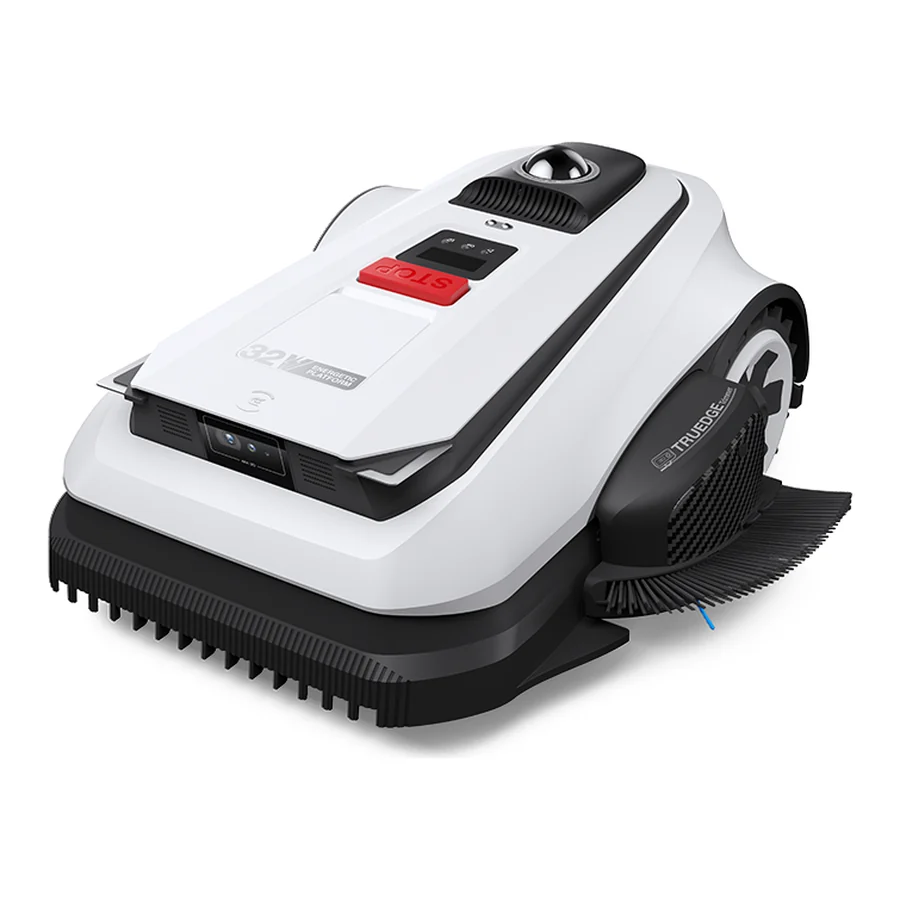
Every robot mower has a dirty secret: the strip it can't reach along fences and walls, which you still trim by hand. The Goat A3000 attacks that with a built-in edge trimmer ECOVACS calls TruEdge. In published testing it eliminated 75 to 90 percent of manual edging. If you've owned a robot mower before, you already know how big a deal that is. If you haven't, trust us: the edge strip is the thing that makes people fall out of love with these machines.
Navigation is dual LiDAR plus AI vision that recognizes over 200 obstacle types, so it works under trees where RTK-only machines wander. Rated for 3/4 acre. The catch is price volatility: MSRP swings between $2,500 and $3,000, with frequent deep discounts, so check before you anchor on a number.
Pros
- Built-in edge trimmer, unique at this price
- Dual LiDAR handles tree cover well
- Strong obstacle recognition
Cons
- Pricing moves around a lot
- ECOVACS is newer to outdoor machines than to vacuums
- 3/4 acre rating, not a big-property machine
5. Worx Landroid Vision Cloud: Satellite Precision, No Antenna
Worx Landroid Vision Cloud, from $1,199.99
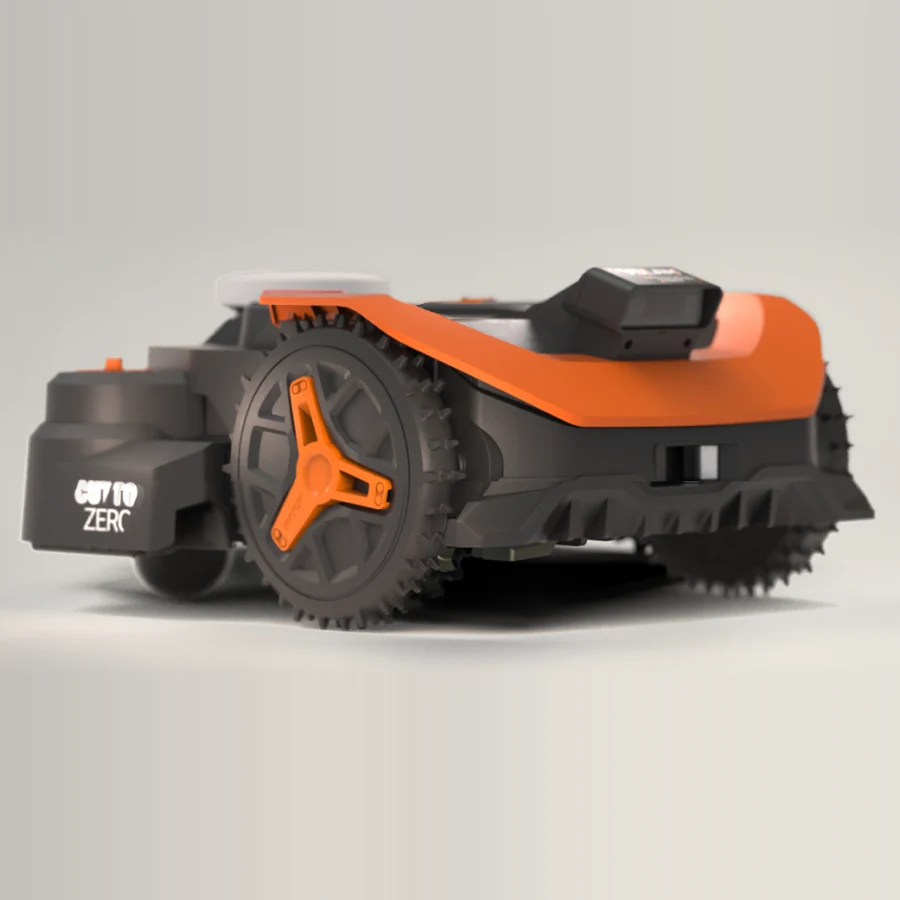
Update, October 2026: we used to describe this as the camera-only machine on this list. The current Vision Cloud line is not. It pairs the camera with what Worx calls RTK Cloud. That is satellite RTK positioning, with the correction signal arriving over the internet instead of from an antenna you mount in the yard. Worx says the service is free for life. When trees or buildings block the sky, it switches to the camera, V-SLAM mapping and its own motion sensors until the satellites come back. You still get no wire, no antenna and no base station, and you now also get planned straight-line mowing.
The standard 2WD line is three machines, and the only thing that changes is how much lawn each is rated for: $1,199.99 for the 1/4 acre, $1,799.99 for the 1/2 acre, and $2,299.99 for the full acre, all rated for 30% slopes. Worx now also sells a Vision Cloud 4WD for hills, rated for 84%: $1,999.99 for the 1/4 acre and $2,999.99 for the 1 acre at Worx, with some retailers already lower. Street prices dip well below list in seasonal sales. Buy for the lawn you have; the cheapest one is not a bargain if it is still mowing at dusk.
The trade-off has moved. On paper, precision is no longer the weak spot. What you are trusting instead is a service: the satellite corrections come from Worx's servers, so the straight lines depend on RTK Cloud staying online, and "free for life" is a company promise rather than hardware you own. The 2WD models also share the lowest slope rating on this list. On a flat lawn where $1,200 is the ceiling, that is a fair trade.
Pros
- Satellite-guided straight lines without mounting an antenna
- Zero infrastructure: no wire, antenna, or station
- Falls back to camera and V-SLAM under trees
Cons
- 2WD models rated for only 30% slopes
- Precision depends on Worx keeping its RTK Cloud service running
- The 4WD hill versions cost $800 more at the 1/4 acre size
The One We'd Skip
EcoFlow Blade, $2,899
The Blade looks fantastic and the spec sheet reads well: LiDAR plus RTK, a wide 260mm cut, an optional leaf-sweeper attachment. But reviews are split in a way the others here aren't. Pro Tool Reviews and AppleInsider found it capable for specific lawns; TechCrunch could not recommend it at the price, citing hardware and software rough edges. At $2,899 for 0.7-acre coverage, you're paying LUBA 3 money for less capacity and more uncertainty. Pass until EcoFlow proves the platform out.
Our Verdict
Buy the Navimow i110N if you have a normal suburban lot with open sky. It does 90% of what the expensive machines do at a third of the price.
Buy the LUBA 3 AWD if your yard is big, steep, or heavily treed. It's the machine with the fewest excuses.
Buy the Husqvarna 410iQ if you want a dealer you can drive to and a 4-year warranty more than you want the best spec sheet. Buy the Goat A3000 if hand-trimming edges is the chore you're actually trying to kill. Buy the Landroid Vision Cloud if the budget stops at $1,200 and your lawn is fairly flat.
How We Evaluate
We compare published specifications, warranty terms, and independent hands-on testing from multiple review outlets. We don't accept payment for placement, and rankings don't change based on commission rates. When a spec is marketing rather than substance (80% slope ratings, acre figures that assume daily mowing), we say so. Full methodology on our about page.
Not sure a robot mower makes sense for you at all? Start with the honest cost math. Confused by navigation tech? Read wire-free vs boundary wire, explained.